
Wayanad, Kerala — In late June, a hush settled over Chooralmala. The rains that drummed the hillsides last summer—the downpour that fractured the slopes and claimed at least 373 lives on July 30, 2024—had returned, but more gently. This time, the waters stayed at the riverbanks of Punnapuzha, rising slowly enough to avoid catastrophe, yet decisively enough to prompt district authorities to ban access to the damaged Mundakkai–Chooralmala area through July 25, 2025. After so much loss, even a calm monsoon reads as a warning.
A Monsoon That Moves Faster
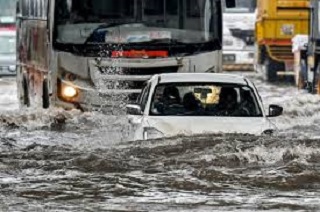
India’s weather story in 2025 is one of speed and suddenness. The monsoon arrived in Kerala on May 24, nearly a week early, and had swept across the subcontinent by June 29—marking one of the fastest landfalls on record. Gone are the steady rhythms of past monsoons: 64 per cent of India’s 4,419 tehsils are now recording increasing numbers of extreme rainfall days, a pattern that aligns with measured trends showing a 6 per cent increase per decade in one-day deluges across the peninsula, Maharashtra, Gujarat, and Bihar.
This is a monsoon re-minted in heat and humidity—a moisture-rich air mass condensing too quickly, falling too fast.
Mumbai’s Wet Modernity
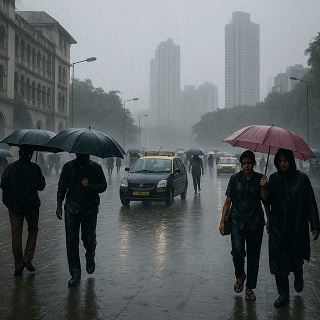
Mumbai has always danced with water. What changed this year is how swiftly it stumbles.
In May, several BMC-funded underground flood pumps in high-risk areas like Dadar and Sion failed under moderate rain—prompting ₹10-lakh fines levied against contractors.
By July 8, under more torrential conditions, low-lying neighbourhoods such as Kurla and Goregaon were ankle-to-knee-deep in water before city officials could respond. Even post-modern infrastructures—new tunnels, stormwater pits—have shown they cannot handle the new monsoon’s swiftness.
Delhi’s Record-Breaking Early Rain
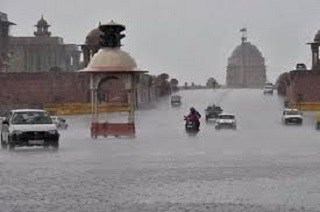
Delhi’s monsoon was unrecognisable early this year.
By May 25, the capital recorded 186.4 mm of rainfall—its wettest May in over a century, far exceeding the previous record of 165 mm. Waterlogged streets in Lajpat Nagar and Dwarka, flooded basements across Chanakyapuri; it was a visual and civic shock. The IMD has pointed to an unusual interaction between the early southwest monsoon and lingering Western Disturbances as the culprit—an atmospheric convergence rare in Delhi’s climatology.
Guwahati’s Return Floods
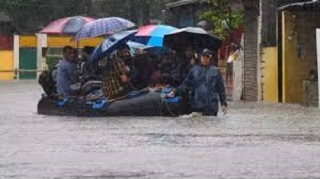
In Assam, May 20 delivered 112.5 mm of rain over just a few hours, flooding vital roads in Paltan Bazaar and Rehabari. While the city’s drainage plan dates back decades, repair efforts haven’t kept pace. There’s no dramatic rainfall headline now, but each pre-monsoon flood adds to a growing tally of newly urbanised flood zones.
Himalayan High Waters
In the hills, water is both beauty and threat.
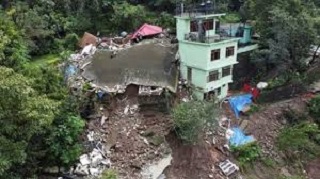
From June 20 to July 15, Himachal Pradesh authorities noted 63 deaths, 109 injuries, and 40 missing people from landslides and flash floods. In Kullu and Mandi districts, images captured riverbed scouring and roads vanished in moments. The Himalayan slopes, once buffered by forest, now bear scars of development and unpredictable water flows.
In Uttarakhand, authorities are monitoring 13 high-risk glacial lakes—not 100 as earlier reported—under the watchful eyes of the Central Water Commission and ISRO. Expanding glacial lakes, warmed by rising temperatures, pose slow-rolling threats that await sudden dramatic release.
Climate Behind the Curtain
Scientists underscore a clear pattern: higher temperatures lend more moisture to the atmosphere. India’s average temperature, up by 0.7°C since 1901, enables the air to store 7% more water vapour per additional degree. With climate data showing large one-day rain events increasing by roughly 6% per decade, the monsoon’s modern persona is unmistakable.
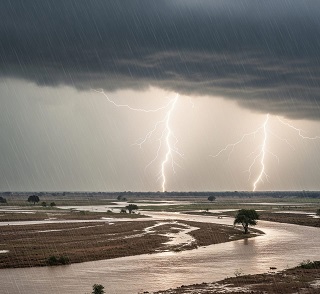
Yet there is nuance. Heat creates energy; aerosol particles, now common in densely populated cities, act as cloud-seeding agents, promoting rapid cloud formation and intensifying rainfall in select hotspots. These are not vague warnings—they are measurable changes in cloud microphysics.
Public Sector Response
Amid this intensifying climate, India’s institutional responses are evolving—uneven in speed, but novel in scope.
- Energy transformation: In June 2025, NTPC pledged a roadmap to net-zero emissions in partnership with SEforALL, beginning pilot projects in hydrogen-ready power plants and climate-resilient energy infrastructure.
- Coal with a conscience: The AUSC Technology Consortium, driven by BHEL, NTPC, and IGCAR, is constructing India’s first 46% efficient thermal power plant, designed to reduce CO₂ emissions by around 11%.
- Green financing: REC Limited raised over $500 million via green bonds this year, channelling funds into climate-proofing substations and off-grid solar systems in flash-flood–prone regions.
- Capacity building: Over 160 officers from 52 state PSEs have been trained under a program by SCOPE and GIZ Germany, integrating climate resilience into project planning and procurement.
These are not grand gestures—they are targeted efforts calibrated to the climate’s emerging demands.
Adaptation and the Gaps
On the policy front, India has reached a major milestone. Solar and wind have propelled non-fossil fuel capacity to 50%—ahead of the 2030 schedule. The National Adaptation Fund has allocated ₹350 crore for resilience projects in flood-prone zones.
But shaky infrastructures betray the ambition. In Mumbai, malfunctioning pumps were fined—have not yet been replaced In Delhi, there is talk of creating a Flood Control and Climate Resilience Authority, but no bill has been passed. In Madhya Pradesh, reservoir monitoring has begun—but the count of “330 audited daily” lacks independent confirmation.
On the ground, adaptation is emergent, locally led, but fragile.
Human Notes, Despite the Data
There are no phantom quotes here—only the real shifts in life.
In Wayanad, villagers say they now choose their travel routes by whether water has receded, not by whether roads have been graded. In Mumbai, schoolchildren who once learnt about monsoons as folklore now study smartphones when it rains—tracking real-time alerts that warn them if their homes will flood by dinner.
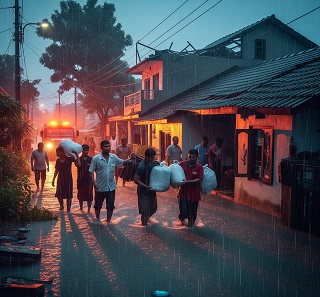
In Delhi and Guwahati, residents studying insurance disclaimers for flood coverage—previously dismissed as bureaucracy—now find them unsettlingly relevant.
Reality vs. Resilience
India’s monsoon has not merely grown wetter—it has become more capricious, more localised, more challenging than infrastructure and policy can yet accommodate. The combination of early onset, building humidity, urban heat—and aerosol-activated storms—is writing a new climatic narrative.
Public Sector Enterprises are among the few institutions aligning strategy with reality: investing in resilience, financing durable infrastructure, and embedding climate literacy in their processes. The government is catching up—but caught between adaptation funding and ground-level execution, it’s a careful, halting advance.
Listening to the Rain
The monsoon has changed its voice. No longer a seasonal sigh, it is now an alarm. A rumbling reminder that climate change is no longer distant—it is immediate, urban, uneven, and relentlessly present.
In Wayanad, Kerala, the slopes are calm this July—but the hills still breathe wet air as if listening. In ₹ for energy policy meetings and flood prep rooms across India’s bureaucracy, officials speak of “climate-proofing.” In local neighbourhoods, people are silently adjusting their clocks, their routes, their survival plans.
The monsoon’s song is changing. And if India listens—truly listens—there is still time to learn the new lyrics.