
Sunday, October 25

Environmental Accountability

Weekly Energy Brief : September 1- September 7
Environmental Accountability, Geopolitics, News Update, Oil & Gas Industry, Renewables

Weekly Energy Brief : September 1- September 7

EXECUTIVE SUMMARY India’s energy system showed resilience amid geopolitical stress. The U.S. 50% tariff shock was offset by Russia’s ~$7/bbl discount, sustaining flows through a ~6 mb/d shadow market while the Indian crude basket hovered near $70.71/bbl; pump prices in Delhi stayed broadly steady. Policy tailwinds accelerated the transition: ALMM List-II became mandatory for solar tenders, and a forthcoming GST reset cuts rates on renewable components to 5% while lifting coal/lignite to 18%, sharpening clean-power economics. Renewables reached 237 GW, with H1-2025 clean generation at ~236 TWh (+20% y/y); domestic module capacity now exceeds 100 GW. Corporates advanced green hydrogen, storage, and ammonia projects, as regulators tightened ESG: SEBI’s value-chain reporting is voluntary in ...
India Energy & Climate Comprehensive Briefing
Environmental Accountability, News Update

India Energy & Climate Comprehensive Briefing

Executive Summary India’s energy sector in 2025 reflects rapid diversification and new challenges. Oil and gas remain central, but import dependence has pushed focus toward **LNG imports India** and diversified crude sourcing. **Coal production India** surpassed one billion tonnes, ensuring supply security, though transport infrastructure constraints persist. **Renewable energy in India** posted record growth, with rooftop solar and wind gaining momentum alongside major policy changes such as the removal of pooled tariffs. Clean electricity accounted for 25% of generation in H1 2025. Meanwhile, **climate change impact India** intensified, from devastating monsoon floods to record internal displacements and worsening heat stress. The Sundarbans and India’s coastline highlight urgent ...
CLIMATE CHANGE INITIATIVE. More on Content, Less on Intent
Environmental Accountability, News Bulletin, News Update

CLIMATE CHANGE INITIATIVE. More on Content, Less on Intent

SATYAPAL MENON 19TH OCTOBER, 2025   Since a decade global heads states have frequently put their heads together to hammer out a   a universal solution against global warming. Climate change targets - reduction by 1.5°C to 2°C  - and deadline -  i.e.,  2030 - was set. But, implementation was out of sync with the datelines. Consequently, over the years and till date, Nature has gone awry , unleashing its fury, in the form of  glacier melts,  melts floods, landslides and desertification. The reasons? Are all these global summits related to climate change proving to be a fiasco with commitments being confined to rhetoric and platitudes? Except for bits and pieces implementation of the action plans to restrict climate change, genuine endeavours to achieve the target of restri...
Monsoon Mayhem lashes India
Environmental Accountability

Monsoon Mayhem lashes India

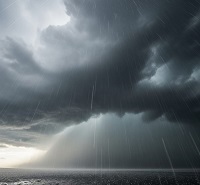
Wayanad, Kerala — In late June, a hush settled over Chooralmala. The rains that drummed the hillsides last summer—the downpour that fractured the slopes and claimed at least 373 lives on July 30, 2024—had returned, but more gently. This time, the waters stayed at the riverbanks of Punnapuzha, rising slowly enough to avoid catastrophe, yet decisively enough to prompt district authorities to ban access to the damaged Mundakkai–Chooralmala area through July 25, 2025. After so much loss, even a calm monsoon reads as a warning. A Monsoon That Moves Faster India’s weather story in 2025 is one of speed and suddenness. The monsoon arrived in Kerala on May 24, nearly a week early, and had swept across the subcontinent by June 29—marking one of the fastest landfalls on record. Gone are the...
Mumbai Apocalypse : 20 Years After the Deluge
Environmental Accountability

Mumbai Apocalypse : 20 Years After the Deluge

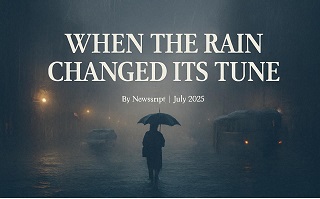
Twenty years on, memory still haunts! On 26th July 2005 , the day began in the usual way. Sky was overcast, Air was thickened with moistures. By afternoon, the rain changed its voice. “The first 20 minutes were just a downpour. By 3 p.m., it sounded like the sky had cracked,” remembers Rekha Patil, a schoolteacher from Kandivali, whose students were trapped in their classroom until the next morning. “The school bell never rang that day. But every other alarm in the city went off—too late.” It was July 26, 2005. . By midnight, Mumbai had recorded an unprecedented 944 mm of rainfall, the highest 24-hour total in India’s meteorological history at the time, according to the IMD’s post-season bulletin. Most of it—709 mm—fell between 2:30 p.m. and 7:30 p.m. An unthinkable monsoon fury. The...
The Day Lightning Fell
Environmental Accountability

The Day Lightning Fell

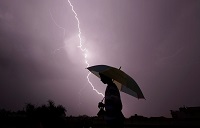
It began like any other monsoon morning in Bengal’s heartland—quiet, muggy, and deceptively calm. The sky hung low, layered with haze, as farmers in Bankura, East Bardhaman, and West Medinipur stepped barefoot into their fields. They had work to do—transplanting paddy, checking irrigation lines, feeding livestock—before the next round of rain. By mid-morning, the clouds thickened into a metallic mass. At 11:10 a.m., the first bolt of lightning fell. Within hours, the fields turned into sites of loss. By 2:50 p.m., eighteen men lay dead. There was no flood. No cyclone. No warning loud enough to be heard. Just a sky that cracked wide open, and didn’t close in time. It did not crackle. It did not warn. It sliced. By 2:50 p.m., eighteen men were dead—struck down by lightning in the very ...
India’s Scorching Future: Europe’s Heatwave Is a Warning We Cannot Ignore
Environmental Accountability

India’s Scorching Future: Europe’s Heatwave Is a Warning We Cannot Ignore

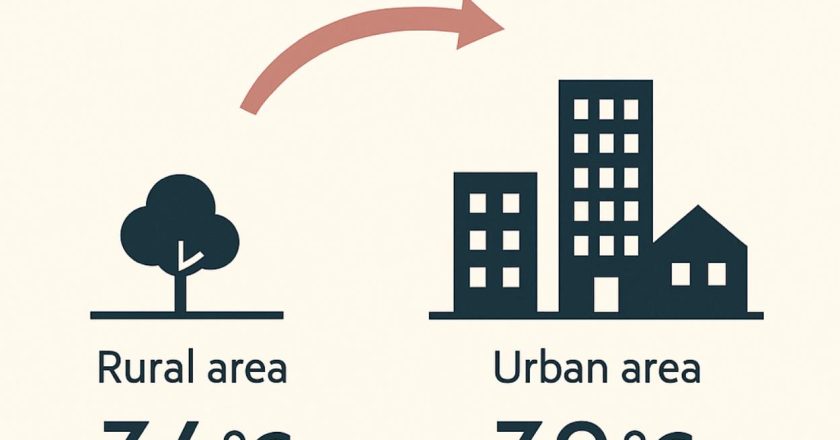
Delhi | July 3, 2025: As record-breaking temperatures sweep across southern Europe this week, killing at least eight people and crippling critical infrastructure, the warning signs for India are unmistakable. While Portugal saw the mercury touch an unprecedented 46.6°C, Italy issued red alerts in 18 cities and Switzerland shut down a nuclear reactor to avoid overheating. These are not isolated events. They are symptoms of an accelerating global crisis—and India may be the next epicentre. For a country where large parts of the population already endure 45°C summers without access to cooling, the lesson from Europe is chilling in its urgency. India is not just at risk. It is perilously close to a tipping point. The current European heatwave, one of the worst in decades, is being driven...
Social Media Auto Publish Powered By : XYZScripts.com