Sunday, October 25

Energy & Resources

India presses ahead with Russian oil imports despite US tariff escalation
Oil & Gas Industry

India presses ahead with Russian oil imports despite US tariff escalation

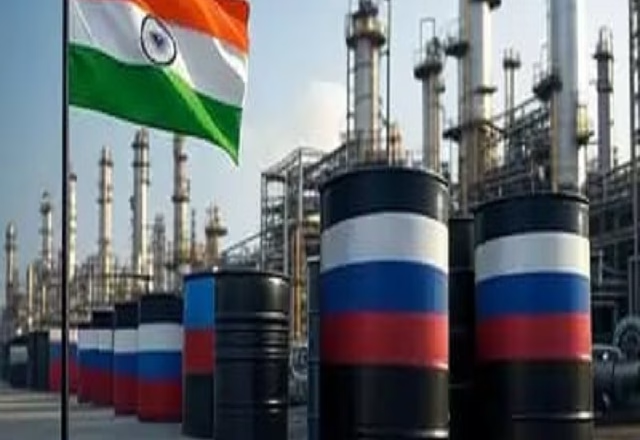
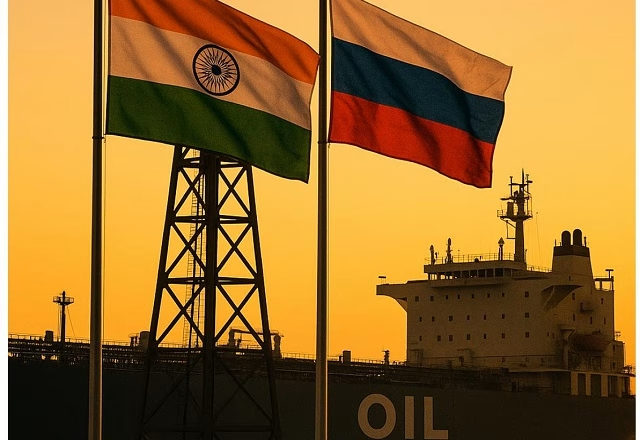
India is preparing to lift Russian crude purchases by as much as a fifth in September, ignoring Washington’s tariff offensive that has pushed duties on Indian goods to 50 per cent. The decision underscores New Delhi’s determination to secure affordable fuel supplies even as its largest trading partner ratchets up pressure. The White House last week doubled tariffs from 25 to 50 per cent, with trade adviser Peter Navarro accusing India of “financing Putin’s war machine” through discounted oil deals. Indian refiners show little sign of retreat. State-owned Indian Oil Corporation and Bharat Petroleum have booked additional September cargoes after briefly halting in July, according to industry executives. Private refiners Reliance Industries and Nayara Energy, which together account for ...

India’s Ethanol Gamble Tests Energy Policy and Consumer Patience
ESG, Oil & Gas Industry

India’s Ethanol Gamble Tests Energy Policy and Consumer Patience

India’s nationwide rollout of E20 petrol—fuel blended with 20% ethanol—marks one of the most ambitious interventions in the country’s energy and agriculture strategy. Officials forecast annual foreign exchange savings of ₹43,000 crore, a cumulative ₹1.44 lakh crore since 2014, and direct payments of ₹40,000 crore to sugarcane farmers this year. Yet consumers and automakers are already confronting the practical costs of transition, while environmental and agricultural trade-offs sharpen the policy debate. Energy and farm economics The government says E20 has displaced 245 lakh metric tonnes of crude oil, cutting import costs and stabilising rural incomes. For sugarcane growers, surplus harvests now feed distilleries, easing payment delays and supporting local job creation. Policymakers fr...
Weekly Energy Brief : September 1- September 7
Environmental Accountability, Geopolitics, News Update, Oil & Gas Industry, Renewables

Weekly Energy Brief : September 1- September 7

EXECUTIVE SUMMARY India’s energy system showed resilience amid geopolitical stress. The U.S. 50% tariff shock was offset by Russia’s ~$7/bbl discount, sustaining flows through a ~6 mb/d shadow market while the Indian crude basket hovered near $70.71/bbl; pump prices in Delhi stayed broadly steady. Policy tailwinds accelerated the transition: ALMM List-II became mandatory for solar tenders, and a forthcoming GST reset cuts rates on renewable components to 5% while lifting coal/lignite to 18%, sharpening clean-power economics. Renewables reached 237 GW, with H1-2025 clean generation at ~236 TWh (+20% y/y); domestic module capacity now exceeds 100 GW. Corporates advanced green hydrogen, storage, and ammonia projects, as regulators tightened ESG: SEBI’s value-chain reporting is voluntary in ...
GAIL stabilises volumes and looks abroad for LNG diversity
Oil & Gas Industry

GAIL stabilises volumes and looks abroad for LNG diversity

GAIL (India) Ltd reported higher quarterly profit on the back of steady transmission volumes and improved trading margins. Industrial demand for gas has held up better than feared, even as spot LNG prices remained volatile. The company’s mantra, executives say, is simple: move molecules first, seek arbitrage second. (more…)
Gas and aviation fuel tax reform tests GST Council’s resolve
Oil & Gas Industry

Gas and aviation fuel tax reform tests GST Council’s resolve

Fiscal pressures and rising energy import dependence add urgency to long-standing reform debate. India’s GST Council convenes next week facing pressure to bring natural gas and aviation turbine fuel under its tax net — a decision that could reshape two critical sectors and offer relief from mounting fiscal pressures. The September 3-4 meeting will examine whether to end the anomalous treatment of both fuels, which remain outside the goods and services tax framework. Currently subject to a patchwork of state VAT and central excise duties, the arrangement has created what industry executives describe as a compliance nightmare. The timing couldn’t be more awkward. India’s energy import bill has climbed above $170bn annually with little sign of abating. With crude oil imports accounti...
Gulf Suppliers Cut Crude Sales to Russian-Backed Indian Refiner
Oil & Gas Industry

Gulf Suppliers Cut Crude Sales to Russian-Backed Indian Refiner

India’s Nayara Energy has cut refinery operations to 70-80% capacity after Saudi Aramco and Iraq’s state oil company SOMO suspended crude supplies following European Union sanctions targeting the Russian-backed facility. The 400,000 barrel-per-day Vadinar refinery, majority-owned by Rosneft, has lost its traditional 3 million barrels monthly from Gulf suppliers and now relies entirely on Russian crude. The supply halt follows EU sanctions imposed in July as part of the bloc’s 18th sanctions package against Russian energy assets. Saudi Aramco and SOMO suspended deliveries to avoid sanctions exposure, severing established commercial relationships with one of India’s largest private refiners. The final Saudi shipment of Arab Light crude arrived July 18 aboard the VLCC Georgios, while th...
ONGC Fights the Crude Reality Check
Oil & Gas Industry

ONGC Fights the Crude Reality Check

ONGC’s latest results presented a mixed picture for investors. Standalone net profit fell 10.2% to ₹8,024 crore in the June quarter, reflecting weaker crude prices that dropped from $83.05 to $66.13 per barrel year-on-year. Revenues from oil declined, and earnings per share at ₹6.38 came in below analyst expectations. The consolidated numbers told a different story. Net profit across the group rose 18.2% to ₹11,552 crore, supported by stronger natural gas realisations and incremental output from new wells, particularly offshore. Higher government-administered gas prices boosted revenues, partly offsetting the crude decline. Shareholders reacted positively despite the headline fall. ONGC’s stock rose 1.27%, suggesting confidence in the company’s long-term production strategy. The ...
Indian Refiners Resume Russian Oil Purchases despite US Tariff Pressure
Geopolitics, Oil & Gas Industry

Indian Refiners Resume Russian Oil Purchases despite US Tariff Pressure

India’s state-owned refiners have resumed Russian crude purchases for September delivery, prioritising commercial benefits over mounting diplomatic pressure from Washington. Indian Oil Corporation and Bharat Petroleum Corporation secured Russian Urals crude at $3-per-barrel discounts for September and October shipments. The companies had paused purchases in July when price differentials narrowed but recommenced buying as commercial terms improved. The procurement restart occurs despite US President Donald Trump’s 25% additional tariff on Indian goods, imposed August 27 to penalise India’s continued energy trade with Russia. The levy specifically targets Delhi’s Russian oil imports, which have provided India with $12.6 billion in savings over 39 months. IOC has expanded its Russian...
When Oil and Tariffs Collide: India’s Energy Gamble in a Tense Trade World
Geopolitics, Oil & Gas Industry

When Oil and Tariffs Collide: India’s Energy Gamble in a Tense Trade World

By Pallab Bhattacharya  Newscript  | August 6, 2025   Oil prices are rising. The rupee is falling. And India’s central bank is walking a policy tightrope. All it took was a fresh burst of tariff threats from former US President Donald Trump, this time aimed squarely at India, to jolt global commodity and currency markets. As of August 6, 2025, Brent crude hovered around $69 per barrel—rebounding from five-week lows—while the Indian rupee slumped 1.18% against the dollar in a single week. Foreign exchange reserves fell sharply by $9.3 billion to $688.9 billion. For a country importing over 89.1% of its crude oil needs, this is more than noise. With domestic production languishing at roughly 573,000 barrels per day, against consumption of over 5.05 to 5.3 million barr...
ONGC JOINED HANDS WITH TATA POWER RENEWABLES TO DEVELOP BATTERY STORAGE
Oil & Gas Industry

ONGC JOINED HANDS WITH TATA POWER RENEWABLES TO DEVELOP BATTERY STORAGE

Tata Power Renewable Energy and Oil and Natural Gas Corporation have joined forces to develop large-scale battery storage, marking a decisive step by India’s biggest oil producer into clean energy. The agreement was signed at India Energy Week in February, as ONGC faces growing pressure to reduce dependence on fossil fuels. Chairman Arun Kumar Singh said energy storage was vital to stabilise the grid as more solar and wind capacity comes online. ONGC has set a goal of 10GW of renewable power by 2030 and pledged net zero emissions by 2038. Tata Power adds operational know-how. It runs India’s largest solar-battery plant, a 100MW facility with 120MWh of storage in Chhattisgarh. Chief executive Deepesh Nanda said the partnership would scale solutions across utilities, industrial consume...
Social Media Auto Publish Powered By : XYZScripts.com