Sunday, October 25

News Update

Market Euphoria or Fundamental Value? Vikram Solar’s 143x Oversubscription
Corporate Watch, News Update

Market Euphoria or Fundamental Value? Vikram Solar’s 143x Oversubscription

Vikram Solar’s IPO, oversubscribed an extraordinary 143 times, has become emblematic of India’s green equity appetite. The ₹1,500 crore raise reflects both investor optimism and the government’s manufacturing push through the PLI scheme for solar PVs. Half the allocation went to institutions, 35% to retail investors—ensuring wide market participation. Grey market premiums hinted at quick listing gains, but the deeper story lies in policy. IPO proceeds will fund expansion into high-efficiency mono PERC and bifacial module manufacturing, directly supporting India’s plan to reduce dependence on Chinese imports. “The oversubscription validates the Make in India story,” said a Delhi brokerage analyst. “Investors want exposure to domestic champions aligned with national strategy.” Chall...
Akshay Urja Day 2025 Highlights India’s Clean Energy Transformation
News Update

Akshay Urja Day 2025 Highlights India’s Clean Energy Transformation

By Newscript News Network August 20,2025 India marked Akshay Urja Day 2025 on August 20 with a celebration of its renewable achievements and climate commitments. From a modest 2.82 GW of renewable capacity in 2014, the country has grown to 116.24 GW by August 2025, with solar contributing nearly 48%. The symbolic day has become an annual moment to showcase India’s progress towards its 500 GW non-fossil capacity goal by 2030. Government officials highlighted flagship programmes such as the National Solar Mission, ultra-mega renewable parks, offshore wind policy and the National Green Hydrogen Mission. “India’s clean energy journey is no longer aspirational—it is operational,” a senior official said. Globally, India now ranks among the top three in annual renewable capacity addit...
Energy News Brief
News Update

Energy News Brief

India added 30GW of renewable capacity in the first nine months of 2025, lifting the total to 226GW and keeping the country on track for its 2030 goals. Officials expect a further 39–43GW by year-end, a pace that places India among the fastest-growing clean-energy markets globally. The 500GW ambition, once treated as overreach, now looks achievable. Solar leads the additions, with wind and hydro reinforcing growth across key states. Analysts cite clearer policy, faster approvals and cheaper technology, alongside deeper private-sector participation in utility-scale projects. Bihar moves early with a 24GW plan Bihar approved a policy targeting 23,968MW of new capacity and 6.1GWh of storage, offering fiscal incentives, single-window clearances and carbon-credit facilitation. Officials se...
Weekly Energy Brief : September 1- September 7
Environmental Accountability, Geopolitics, News Update, Oil & Gas Industry, Renewables

Weekly Energy Brief : September 1- September 7

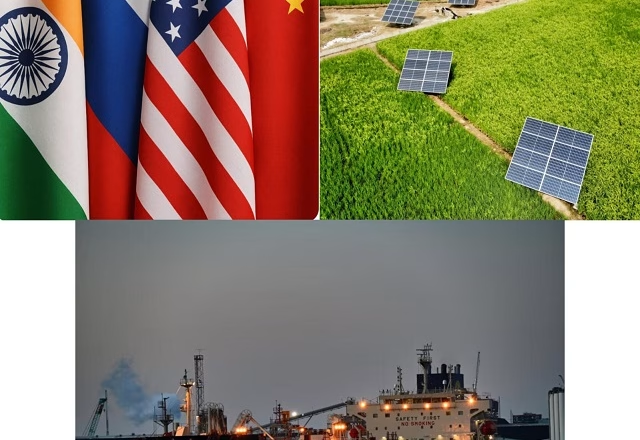
EXECUTIVE SUMMARY India’s energy system showed resilience amid geopolitical stress. The U.S. 50% tariff shock was offset by Russia’s ~$7/bbl discount, sustaining flows through a ~6 mb/d shadow market while the Indian crude basket hovered near $70.71/bbl; pump prices in Delhi stayed broadly steady. Policy tailwinds accelerated the transition: ALMM List-II became mandatory for solar tenders, and a forthcoming GST reset cuts rates on renewable components to 5% while lifting coal/lignite to 18%, sharpening clean-power economics. Renewables reached 237 GW, with H1-2025 clean generation at ~236 TWh (+20% y/y); domestic module capacity now exceeds 100 GW. Corporates advanced green hydrogen, storage, and ammonia projects, as regulators tightened ESG: SEBI’s value-chain reporting is voluntary in ...
Centre Scraps Renewable Pricing Pools to Unlock Faster Power Deals
News Update

Centre Scraps Renewable Pricing Pools to Unlock Faster Power Deals

By Newscript News Network August 20, 2025 In a significant policy reversal, the Ministry of Power has scrapped the central renewable energy pricing pools established in February 2024. The pools, designed to aggregate tariffs for solar and hybrid projects, were intended to simplify procurement. Instead, developers complained they slowed contract closures. By dismantling the centralised mechanism, the government is giving developers and buyers more freedom to negotiate bilateral power purchase agreements (PPAs). “This will allow deals to be structured faster and on more competitive terms,” said an official from the Solar Developers Association. For developers, the policy shift reduces administrative bottlenecks that often delayed projects by months. Analysts believe the move coul...
India Energy & Climate Comprehensive Briefing
Environmental Accountability, News Update

India Energy & Climate Comprehensive Briefing

Executive Summary India’s energy sector in 2025 reflects rapid diversification and new challenges. Oil and gas remain central, but import dependence has pushed focus toward **LNG imports India** and diversified crude sourcing. **Coal production India** surpassed one billion tonnes, ensuring supply security, though transport infrastructure constraints persist. **Renewable energy in India** posted record growth, with rooftop solar and wind gaining momentum alongside major policy changes such as the removal of pooled tariffs. Clean electricity accounted for 25% of generation in H1 2025. Meanwhile, **climate change impact India** intensified, from devastating monsoon floods to record internal displacements and worsening heat stress. The Sundarbans and India’s coastline highlight urgent ...
Oil India: Modest Discoveries, Cautious Partnerships
News Update

Oil India: Modest Discoveries, Cautious Partnerships

By Special Correspondent  Newscript, August 18, 2025 Oil India Limited, India’s second-largest explorer, has quietly expanded its resource base with seven new oil and gas finds over the past four years. The discoveries are modest compared with ONGC’s 75 MMTOE reserves, but they reflect steady incremental gains from under-explored basins. The company has also entered into a joint operating agreement with ONGC for three OALP-IX blocks, signalling recognition that collaboration is essential to derisk exploration in frontier areas. This partnership model could prove vital in unlocking resources faster, though execution will hinge on regulatory agility. Oil India’s strength lies in its relatively nimble structure and regional expertise in the Northeast, where it has maintained stead...
Policy Architecture: Bharat Electricity 2025 as Strategic Coordination Platform
Corporate Watch, News Update

Policy Architecture: Bharat Electricity 2025 as Strategic Coordination Platform

From September 2–4 in New Delhi, the Bharat Electricity 2025 forum will serve as a policy coordination platform to align India’s ambitious renewable goals with financial structures. With over 10,000 participants, including senior ministers, it underscores the government’s recognition that the 500 GW by 2030 target requires unprecedented coordination. Key focus areas: grid modernisation, large-scale battery storage, InvIT financing, viability gap funding (VGF), and offshore wind frameworks. India requires $20–25 billion annually in grid and storage investments. Reliance solely on state-backed borrowing is unsustainable, pushing policy toward green bonds, securitisation, and blended finance instruments. “Private capital must be mobilised at scale,” a senior ministry official said. New ...
Traditional Energy’s Strategic Response: BPCL’s Andhra Pradesh Gambit
News Update, Oil & Gas Industry

Traditional Energy’s Strategic Response: BPCL’s Andhra Pradesh Gambit

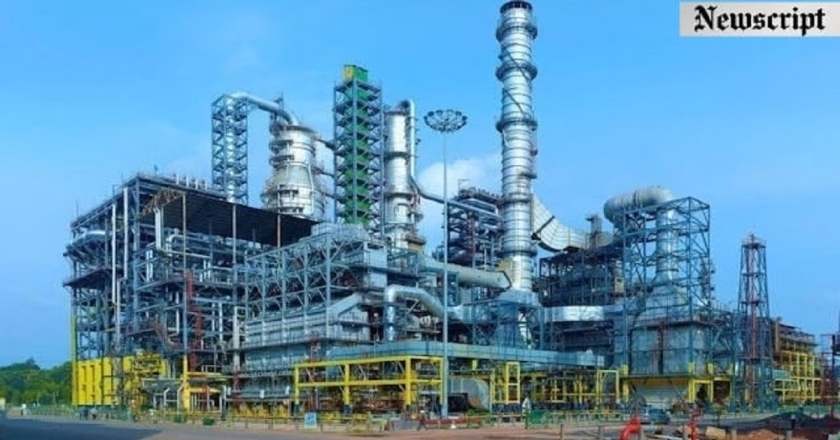
India’s transition policy has emphasised coexistence—scaling renewables while securing petroleum supply. BPCL’s proposed $6–7 billion refinery-petrochemical complex at Ramayapatnam, Andhra Pradesh, illustrates this balance. The project, financed through a 70:30 debt–equity structure, integrates refining with petrochemicals. Refining offers 5–8% margins, petrochemicals 15–20%, making the model resilient. Port proximity ensures export competitiveness to Southeast Asia, in line with India’s aspiration to become a regional energy hub. BPCL’s move aligns with government priorities: industrial competitiveness, energy security, and gradual diversification. “This is not a retreat by traditional energy—it is a repositioning,” said an energy analyst. Environmental scrutiny and ESG complianc...
Cross-border electricity empire cements India’s stranglehold over South Asian energy
Geopolitics, News Update, Power

Cross-border electricity empire cements India’s stranglehold over South Asian energy

India has consolidated its position as South Asia’s primary energy supplier through expanded cross-border electricity trading arrangements with neighbouring countries, fundamentally reshaping regional energy security dynamics. The strategic initiative has transformed India from a regional energy importer to the dominant electricity exporter across the subcontinent. Recent trade data indicates India now exports electricity to Bangladesh, Nepal, Myanmar, and Bhutan through dedicated transmission interconnections, generating substantial foreign exchange earnings whilst supporting regional development objectives. The cross-border trade mechanism enables optimal utilisation of India’s surplus generation capacity during specific seasons. Energy ministry officials highlight that cross-borde...
Social Media Auto Publish Powered By : XYZScripts.com