Sunday, October 25

News Bulletin

Coal India powers up ₹25,000cr renewable empire
News Bulletin, Newsletter, Renewables

Coal India powers up ₹25,000cr renewable empire

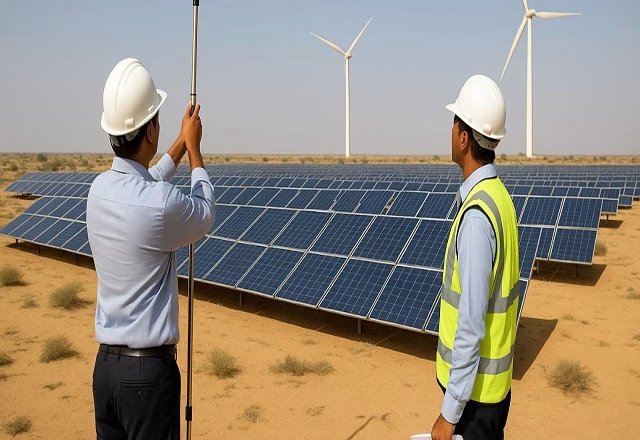
Executive Summary Coal India commits ₹25,000 crore ($3bn) to develop 4.5GW renewable capacity Partnership with AM Green for renewable ammonia production facilities Targeting 2,500-3,000 MW solar and 1,500-2,000 MW wind projects Strategy aims to future-proof 229,000-strong workforce MoU signed 7 May 2025, marking radical departure from fossil fuels   At a windswept site in Rajasthan’s Thar desert, where Coal India once prospected for lignite deposits, engineers now measure wind speeds and solar irradiation levels. The scene captures the magnitude of change at the world’s largest coal producer. Coal India Limited has committed ₹25,000 crore ($3bn) to develop 4.5GW of renewable capacity, marking the state-owned miner’s most radical departure from its fossil...
GST Hike Squeezes Oil Explorers as Tax Burden Climbs to 18%
News Bulletin, Newsletter, Oil & Gas Industry

GST Hike Squeezes Oil Explorers as Tax Burden Climbs to 18%

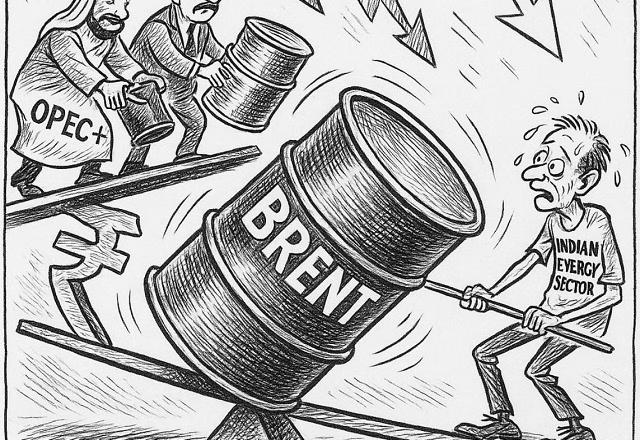
Executive note India’s oil exploration sector faces a punishing fiscal blow after the GST Council’s decision to raise service taxes from 12% to 18%. The September 2025 hike will saddle upstream companies with billions in additional costs, squeezing ONGC, Oil India, Vedanta and Reliance at a time when commodity price volatility and currency pressures already challenge project economics across the energy sector.   India’s upstream oil and gas industry has absorbed a significant fiscal shock following the Goods and Services Tax (GST) Council’s decision to increase rates on exploration and production services. The tax rate climbs to 18% from 12%, effective September 22, 2025, covering petroleum exploration, mining, drilling, and related support activities across the sector. Indu...
News Bulletin

NTPC Hybrid Project Signals Shift in Renewables

Maharashtra’s regulatory approval for NTPC’s wind-solar hybrid project marks acceptance of combined renewable technologies as grid integration solutions. Hybrid systems address intermittency challenges by blending complementary generation profiles. Solar output peaks during daytime while wind power often increases during evening hours, providing more consistent electricity supply for distribution utilities. This reduces balancing costs and backup generation requirements compared to single-technology projects. NTPC’s transformation from coal dominance toward clean energy positions the state generator as a model for other producers. The company’s technical expertise in both solar and wind technologies supports optimal hybrid configurations for different regional conditions. Widespre...
News Bulletin

Coal Mining Gets Digital Overhaul

The Coal Ministry’s AI-enabled monitoring centre in Ranchi represents broader digitisation efforts across India’s mining sector. Real-time surveillance targets theft reduction, safety improvement and operational efficiency as production volumes exceed 1bn tonnes. Digital platforms integrate satellite monitoring, GPS tracking and automated systems to address persistent revenue losses from pilferage and unauthorised mining. The technology provides unprecedented visibility into coal supply chains while creating audit trails for regulatory compliance. Implementation challenges include system integration, staff training and data security across multiple stakeholders. Success requires user adoption and continuous upgrades to address emerging operational needs in a traditionally analogue se...
CLIMATE CHANGE INITIATIVE. More on Content, Less on Intent
Environmental Accountability, News Bulletin, News Update

CLIMATE CHANGE INITIATIVE. More on Content, Less on Intent

SATYAPAL MENON 19TH OCTOBER, 2025   Since a decade global heads states have frequently put their heads together to hammer out a   a universal solution against global warming. Climate change targets - reduction by 1.5°C to 2°C  - and deadline -  i.e.,  2030 - was set. But, implementation was out of sync with the datelines. Consequently, over the years and till date, Nature has gone awry , unleashing its fury, in the form of  glacier melts,  melts floods, landslides and desertification. The reasons? Are all these global summits related to climate change proving to be a fiasco with commitments being confined to rhetoric and platitudes? Except for bits and pieces implementation of the action plans to restrict climate change, genuine endeavours to achieve the target of restri...
News Bulletin

Green Finance Accelerates with IREDA Bond Issue

IREDA’s ₹453 crore perpetual bond issue on September 11 attracted strong investor interest, with subscription levels reaching 2.69 times the offering at 7.70% per annum. The success demonstrates growing appetite for renewable energy financing among domestic institutions. The proceeds support solar, wind and hybrid project development as India targets 500 GW renewable capacity by 2030. IREDA serves as crucial intermediary providing concessional finance while offering investors exposure to the clean energy expansion. Green bond markets in India have matured significantly, with cumulative issuance exceeding $15bn. Financial innovation includes infrastructure investment trusts and blended finance mechanisms combining public and private capital for project development. The successful o...
News Bulletin

Coal Sector Ramps Up Afforestation

Coal and lignite companies have planted approximately 30mn saplings across 13,400 hectares of mined land over six years. The restoration efforts employ techniques including Miyawaki forest development and drone seeding to accelerate ecological recovery. These programmes fulfil environmental clearance obligations as coal production exceeds 1bn tonnes annually. While afforestation provides local environmental benefits and improves community relations, critics argue it cannot offset combustion emissions from expanded coal use. Success rates vary significantly based on regional climate, soil conditions and maintenance quality. States with reliable monsoons report higher survival rates, though long-term ecosystem restoration requires sustained investment beyond initial plantation efforts....
News Bulletin

India Bets on Modular Nuclear for Baseload Security

The Union Budget’s ₹20,000 crore allocation for nuclear expansion prioritises Small Modular Reactors over conventional plants. Five indigenous SMRs are targeted for operation by 2033, supporting longer-term capacity goals of 100 GW by 2047. Nuclear power contributes just 3% of India’s electricity generation through 23 operational reactors totalling 7.48 GW capacity. Historical delays and cost overruns have limited expansion despite abundant uranium resources and established reactor technology. SMRs offer advantages including lower capital requirements, shorter construction periods and greater deployment flexibility. The technology could address persistent challenges in India’s nuclear programme while building indigenous design capabilities through organisations like BARC. Internat...
News Bulletin

India Plots Carbon Capture as Emissions Persist

NITI Aayog’s September announcement of a Carbon Capture, Utilisation and Storage mission signals acceptance that India’s emissions cannot be eliminated through renewable energy alone. The initiative targets industrial clusters where capture technology offers the most viable decarbonisation pathway. Cement, steel and aluminium producers face the dual challenge of process emissions that resist electrification and global buyers demanding lower carbon footprints. The government proposes incentives covering 50-100% of pilot project costs to accelerate commercial deployment. International partnerships with Norway, the US and UK provide technology access while India develops indigenous capabilities. However, global CCUS experience highlights persistent cost challenges, with capture expenses...
Social Media Auto Publish Powered By : XYZScripts.com