
Sunday, October 25

Tag: Climate Change

India’s Solar Revolution Finds Its Missing Spark in Female Talent
Newsletter, Renewables

India’s Solar Revolution Finds Its Missing Spark in Female Talent

Executive note: Finds Its Missing Spark in Female Talent India’s renewable sector employs 1.02 million with 3.4 million jobs projected by 2030 Women hold 43% of STEM degrees but just 11% of clean energy positions• Projects with female participation show superior completion rates and stakeholder engagement Gender-diverse teams deliver measurably better outcomes in complex energy infrastructure Untapped talent pool could accelerate India’s 500GW renewable   The change is discernible, but, is the pace of change quite remarkable? World’s most populous country has embarked on a ‘Great Green Revolution’, but if the 50 per cent of its population-the women- is truly getting what it deserves? Whether renewables, that bring a new hope to surmount energy deficiency, pav...

CLIMATE CHANGE INITIATIVE. More on Content, Less on Intent
Environmental Accountability, News Bulletin, News Update

CLIMATE CHANGE INITIATIVE. More on Content, Less on Intent

SATYAPAL MENON 19TH OCTOBER, 2025   Since a decade global heads states have frequently put their heads together to hammer out a   a universal solution against global warming. Climate change targets - reduction by 1.5°C to 2°C  - and deadline -  i.e.,  2030 - was set. But, implementation was out of sync with the datelines. Consequently, over the years and till date, Nature has gone awry , unleashing its fury, in the form of  glacier melts,  melts floods, landslides and desertification. The reasons? Are all these global summits related to climate change proving to be a fiasco with commitments being confined to rhetoric and platitudes? Except for bits and pieces implementation of the action plans to restrict climate change, genuine endeavours to achieve the target of restri...
Monsoon Mayhem lashes India
Environmental Accountability

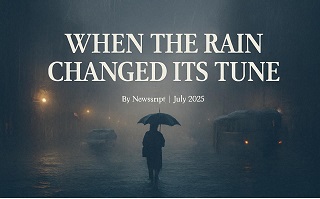
Monsoon Mayhem lashes India

Wayanad, Kerala — In late June, a hush settled over Chooralmala. The rains that drummed the hillsides last summer—the downpour that fractured the slopes and claimed at least 373 lives on July 30, 2024—had returned, but more gently. This time, the waters stayed at the riverbanks of Punnapuzha, rising slowly enough to avoid catastrophe, yet decisively enough to prompt district authorities to ban access to the damaged Mundakkai–Chooralmala area through July 25, 2025. After so much loss, even a calm monsoon reads as a warning. A Monsoon That Moves Faster India’s weather story in 2025 is one of speed and suddenness. The monsoon arrived in Kerala on May 24, nearly a week early, and had swept across the subcontinent by June 29—marking one of the fastest landfalls on record. Gone are the...
The Day Lightning Fell
Environmental Accountability

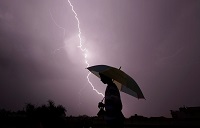
The Day Lightning Fell

It began like any other monsoon morning in Bengal’s heartland—quiet, muggy, and deceptively calm. The sky hung low, layered with haze, as farmers in Bankura, East Bardhaman, and West Medinipur stepped barefoot into their fields. They had work to do—transplanting paddy, checking irrigation lines, feeding livestock—before the next round of rain. By mid-morning, the clouds thickened into a metallic mass. At 11:10 a.m., the first bolt of lightning fell. Within hours, the fields turned into sites of loss. By 2:50 p.m., eighteen men lay dead. There was no flood. No cyclone. No warning loud enough to be heard. Just a sky that cracked wide open, and didn’t close in time. It did not crackle. It did not warn. It sliced. By 2:50 p.m., eighteen men were dead—struck down by lightning in the very ...
India’s Scorching Future: Europe’s Heatwave Is a Warning We Cannot Ignore
Environmental Accountability

India’s Scorching Future: Europe’s Heatwave Is a Warning We Cannot Ignore

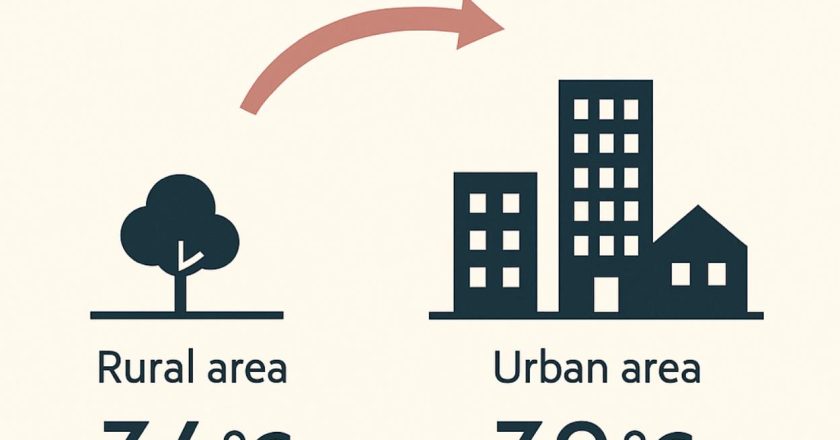
Delhi | July 3, 2025: As record-breaking temperatures sweep across southern Europe this week, killing at least eight people and crippling critical infrastructure, the warning signs for India are unmistakable. While Portugal saw the mercury touch an unprecedented 46.6°C, Italy issued red alerts in 18 cities and Switzerland shut down a nuclear reactor to avoid overheating. These are not isolated events. They are symptoms of an accelerating global crisis—and India may be the next epicentre. For a country where large parts of the population already endure 45°C summers without access to cooling, the lesson from Europe is chilling in its urgency. India is not just at risk. It is perilously close to a tipping point. The current European heatwave, one of the worst in decades, is being driven...
Social Media Auto Publish Powered By : XYZScripts.com