
Sunday, October 25

Author: Pallab Bhattacharya

India’s Solar Revolution Finds Its Missing Spark in Female Talent
Newsletter, Renewables

India’s Solar Revolution Finds Its Missing Spark in Female Talent

Executive note: Finds Its Missing Spark in Female Talent India’s renewable sector employs 1.02 million with 3.4 million jobs projected by 2030 Women hold 43% of STEM degrees but just 11% of clean energy positions• Projects with female participation show superior completion rates and stakeholder engagement Gender-diverse teams deliver measurably better outcomes in complex energy infrastructure Untapped talent pool could accelerate India’s 500GW renewable   The change is discernible, but, is the pace of change quite remarkable? World’s most populous country has embarked on a ‘Great Green Revolution’, but if the 50 per cent of its population-the women- is truly getting what it deserves? Whether renewables, that bring a new hope to surmount energy deficiency, pav...

Telangana Blast Kills 36: Behind India’s Silent Industrial Crisis
Energy Transition, Uncategorized

Telangana Blast Kills 36: Behind India’s Silent Industrial Crisis

A deadly explosion at Sigachi Industries’ chemical plant in Telangana has killed 36 workers, exposing India’s deep-rooted industrial safety gaps and reigniting debate over regulatory enforcement. Key Pointers Deadliest industrial accident: The Sigachi Industries explosion marks one of the most catastrophic industrial incidents in Telangana’s history, claiming 36 lives and injuring dozens. Safety concerns exposed: The tragedy has reignited debates surrounding systemic lapses in India’s industrial safety protocols, particularly in the chemical and pharmaceutical sectors. Migrant worker vulnerability: Victims included migrant workers from multiple states, highlighting issues of unsafe working conditions across socio-economic divides. Regulatory scrutiny: Existing industrial s...
Monsoon Mayhem lashes India
Environmental Accountability

Monsoon Mayhem lashes India

Wayanad, Kerala — In late June, a hush settled over Chooralmala. The rains that drummed the hillsides last summer—the downpour that fractured the slopes and claimed at least 373 lives on July 30, 2024—had returned, but more gently. This time, the waters stayed at the riverbanks of Punnapuzha, rising slowly enough to avoid catastrophe, yet decisively enough to prompt district authorities to ban access to the damaged Mundakkai–Chooralmala area through July 25, 2025. After so much loss, even a calm monsoon reads as a warning. A Monsoon That Moves Faster India’s weather story in 2025 is one of speed and suddenness. The monsoon arrived in Kerala on May 24, nearly a week early, and had swept across the subcontinent by June 29—marking one of the fastest landfalls on record. Gone are the...
Why Energy Journalism Matters More Than Ever
Opinion

Why Energy Journalism Matters More Than Ever

Four decades of covering energy markets teaches you one thing: complexity never simplifies, it just shifts. I began as a journalist in Kolkata when energy meant keeping lights on. Two decades later, I joined ONGC for another twenty years—learning how boardroom strategies translate into operational reality. Training across India and Europe on energy transition revealed a truth: everyone’s improvising, some just do it more elegantly. Today’s energy paradoxes fascinate me. Shell invests billions in renewables while expanding oil operations. Governments promise net-zero while securing gas imports. Solar costs collapse, yet grid infrastructure requires trillions. This isn’t contradiction—it’s transformation at civilizational scale. Newscript Energy World was conceived for this momen...
Mumbai Apocalypse : 20 Years After the Deluge
Environmental Accountability

Mumbai Apocalypse : 20 Years After the Deluge

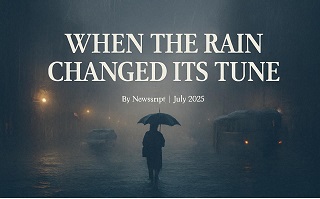
Twenty years on, memory still haunts! On 26th July 2005 , the day began in the usual way. Sky was overcast, Air was thickened with moistures. By afternoon, the rain changed its voice. “The first 20 minutes were just a downpour. By 3 p.m., it sounded like the sky had cracked,” remembers Rekha Patil, a schoolteacher from Kandivali, whose students were trapped in their classroom until the next morning. “The school bell never rang that day. But every other alarm in the city went off—too late.” It was July 26, 2005. . By midnight, Mumbai had recorded an unprecedented 944 mm of rainfall, the highest 24-hour total in India’s meteorological history at the time, according to the IMD’s post-season bulletin. Most of it—709 mm—fell between 2:30 p.m. and 7:30 p.m. An unthinkable monsoon fury. The...
The Day Lightning Fell
Environmental Accountability

The Day Lightning Fell

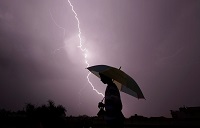
It began like any other monsoon morning in Bengal’s heartland—quiet, muggy, and deceptively calm. The sky hung low, layered with haze, as farmers in Bankura, East Bardhaman, and West Medinipur stepped barefoot into their fields. They had work to do—transplanting paddy, checking irrigation lines, feeding livestock—before the next round of rain. By mid-morning, the clouds thickened into a metallic mass. At 11:10 a.m., the first bolt of lightning fell. Within hours, the fields turned into sites of loss. By 2:50 p.m., eighteen men lay dead. There was no flood. No cyclone. No warning loud enough to be heard. Just a sky that cracked wide open, and didn’t close in time. It did not crackle. It did not warn. It sliced. By 2:50 p.m., eighteen men were dead—struck down by lightning in the very ...
The Quiet Heat: India’s Geothermal Gamble Beneath the Himalayas
Renewables

The Quiet Heat: India’s Geothermal Gamble Beneath the Himalayas

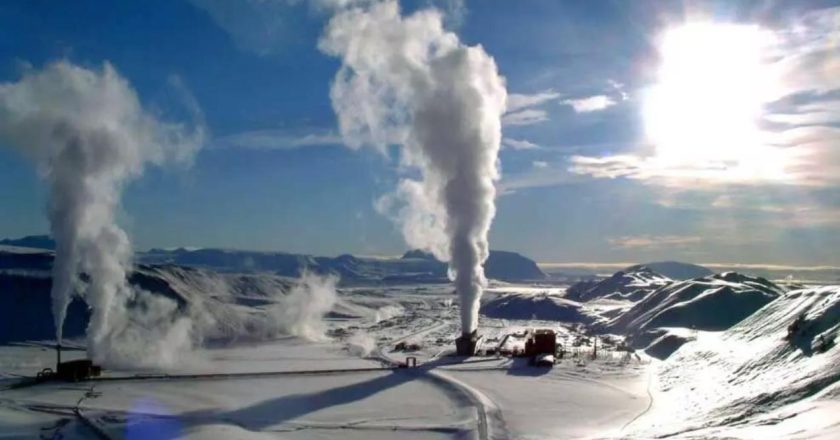
In a silent corner of Ladakh’s Changthang plateau, where the land is so dry that even the wind seems brittle, a plume of steam rises from a field speckled with goat droppings and prayer flags. For centuries, nomadic shepherds here have treated the sulphuric springs of Puga Valley as little more than natural oddities—bubbling pools that boiled yak bones and warmed cracked palms during the long, cruel winters. Now, a different kind of pilgrim has arrived. Wearing ONGC (Oil and Natural Gas Corporation ) coveralls and sporting helmets that look absurdly futuristic against the desolate backdrop, a team of geologists and engineers is drilling 1,000 meters into the Earth’s crust. They’re not looking for oil. They’re looking for heat. And in that heat, they’re hoping to find the future. ...
L&T and the Case for Private Nuclear Participation
Corporate Watch, News Update

L&T and the Case for Private Nuclear Participation

Larsen & Toubro’s chairman has called for private sector participation across India’s nuclear value chain, from mining to fuel processing and plant construction. The statement has reignited debate on whether India’s atomic energy ambitions can be met without loosening the state’s monopoly. India’s current nuclear capacity remains modest at 8.7GW, far below targets. Projects have long suffered delays due to financing, technology lock-ins, and limited public sector capacity. By contrast, global leaders like EDF, Rosatom, and KEPCO rely heavily on private contractors for scale and efficiency. L&T, with decades of engineering experience, argues that excluding private firms is stifling innovation and slowing execution. The appeal comes as NTPC has partnered NPCIL for a new project...
India’s Scorching Future: Europe’s Heatwave Is a Warning We Cannot Ignore
Environmental Accountability

India’s Scorching Future: Europe’s Heatwave Is a Warning We Cannot Ignore

Delhi | July 3, 2025: As record-breaking temperatures sweep across southern Europe this week, killing at least eight people and crippling critical infrastructure, the warning signs for India are unmistakable. While Portugal saw the mercury touch an unprecedented 46.6°C, Italy issued red alerts in 18 cities and Switzerland shut down a nuclear reactor to avoid overheating. These are not isolated events. They are symptoms of an accelerating global crisis—and India may be the next epicentre. For a country where large parts of the population already endure 45°C summers without access to cooling, the lesson from Europe is chilling in its urgency. India is not just at risk. It is perilously close to a tipping point. The current European heatwave, one of the worst in decades, is being driven...
From Trade Room to Tandoor: Why Energy Lies At The Centre
Uncategorized

From Trade Room to Tandoor: Why Energy Lies At The Centre

Trade, Tariffs and the Tandoor: How India’s Energy Appetite Is Now a Diplomatic Crisis When Indian families across Delhi, Jaipur or Bhubaneswar step into their kitchens this week, they may notice something unsettling. The humble act of boiling rice or making tea now costs more than it did last month. At the heart of this quiet inflation lies an unlikely culprit: America’s steel tariffs and a deadlocked trade deal. India’s multi-layered standoff with the United States, officially about dairy, autos, and genetically modified crops, is fast evolving into something far more consequential. With just days left before a July 9 deadline, the talks between the world’s largest and fifth-largest economies have hit an impasse. But while diplomats bicker, ordinary Indians are paying the price—quite l...
Social Media Auto Publish Powered By : XYZScripts.com