
By Pallab Bhattacharya
Newscript, August 12, 2025
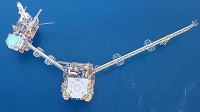
Fig.1: Arms Of Urja
Oil and Natural Gas Corporation’s latest move is not a mega-field gamble but a calculated strike on two modest offshore blocks that could quietly strengthen India’s energy security. The ₹4,606.35 crore investment in Andhra Pradesh’s Chandrika and GS-49 fields, sitting under the shallow waters of the Bay of Bengal, is about squeezing proven reserves with precision rather than chasing headline-grabbing wildcats.
Ten wells, two unmanned platforms, a pipeline to shore, and an expanded onshore terminal at Odalarevu form the skeleton of the project. If all goes to plan, first gas could flow by the latter half of the decade. But before any drill bit turns, the project must pass its first—and potentially slowest—test: environmental clearance.
A Basin Written by Time and Tectonics
The Krishna–Godavari Basin is a kind of geological biography—one written over 130 million years. It began when India tore away from the Antarctic landmass, leaving a scar that sank and filled with sediments. Over time, the rivers Krishna and Godavari acted as meticulous scribes, laying down layer after layer of silt, sand, and clay. Some of those layers, buried deep, cooked slowly under heat and pressure, transforming ancient plant and marine life into oil and gas.
If you could peel back the Bay of Bengal, you’d see a giant, tilted mosaic of high ridges and deep trenches. These ridges—known as “horsts”—and the troughs between them—“grabens”—are nature’s filing system for hydrocarbons. Fault lines crisscross the basin like invisible fences, sometimes locking oil and gas in place, sometimes letting them slip away. For drillers, this is both the puzzle and the prize.
From Survey Sheets to Subsea Steel
ONGC first came to this basin in 1958 with little more than survey maps and seismic gear. Decades of exploration have since produced a string of successes, including the deep-water KG-DWN-98/2 project next door, which started oil and gas production in early 2024. But Chandrika and GS-49 are a different game—smaller, nearer-shore discoveries that can be developed more quickly and at lower cost.
The plan is straightforward: install wellheads on the seabed, cap them with subsea “trees” to control the flow, connect them to two platforms that need no permanent crews, and route everything through a pipeline to the Odalarevu terminal. By using an existing facility, ONGC avoids building new shore infrastructure and keeps costs in check.
Why Environmental Approval Matters
Konaseema’s coastline is not just an energy frontier—it is also a fragile ecosystem. Here, freshwater from the Godavari mingles with saltwater from the Bay, creating rich fishing grounds and sustaining mangroves that protect villages from storm surges.
At its July 24 review, the environment ministry’s Expert Appraisal Committee asked ONGC for a deeper biodiversity study, a detailed habitat restoration plan, and a beefed-up environmental management programme. A senior official says the company will adjust work schedules to avoid fish breeding seasons and widen community consultations.
Small Fields, Big Picture
India’s import bill for crude oil was $137 billion in 2024–25. Even modest increases in domestic output help reduce that dependence. The government’s Discovered Small Fields policy exists to monetise such overlooked reserves, and Chandrika–GS-49 fit neatly into that strategy.
For Andhra Pradesh, the investment means jobs at fabrication yards and service contracts for barge operators, welders, and technicians. For ONGC, it’s a way to keep east coast operations humming and field crews sharp without the cost and complexity of deep-water megaprojects.
Risks Above and Below the Waterline
The geology here is well understood, but still tricky. Faults can split reservoirs into small pockets, requiring careful mapping and extra drilling to reach them. Offshore weather in the Bay of Bengal can halt operations for days. And the environmental review process, while necessary, can stretch timelines.
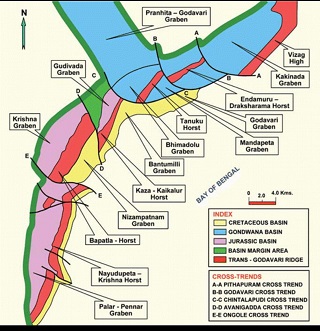
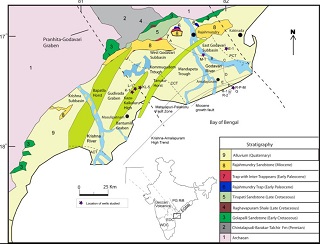
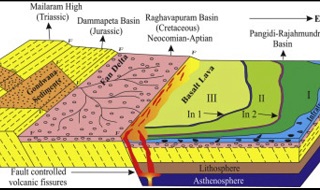
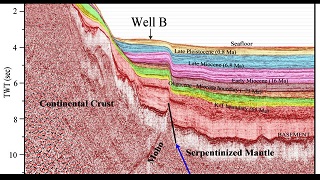
Fig.2:Scientific Verification: Krishna-Godavari Basin Geological Claims
ONGC’s strategy is to work in phases, start with shallow-water rigs, keep platforms unmanned, and piggyback on existing facilities. That lowers risk but doesn’t remove it—especially in a world where oil prices and regulations can shift quickly.
The Long View
If approvals come in the next 12–18 months, production could begin by 2026 and peak around 2028, with output continuing for decades. These barrels and cubic metres will not transform India’s import equation overnight, but they will chip away at it steadily—while keeping the basin’s long, complex story open for the next chapter.
For the engineers and geologists who have worked these waters for more than 60 years, Chandrika–GS-49 is less about conquering the unknown than making the most of what is already proven. In the quiet rhythms of energy security, sometimes the small, steady beats matter more than the loud ones.