
Saturday, April 18

Tag: Corporate India

Western States Dominating
Renewables

Western States Dominating

By Pallab Bhattacharya  Newscript, August 16, 2025 India’s renewable map is being reshaped by its western states. Rajasthan, with 37.4 GW installed capacity, and Gujarat, with 35.5 GW, have emerged as the epicentres of India’s green build out. Tamil Nadu, with its wind-solar mix, continues to anchor the south. Favourable land policies, high solar irradiance, and proactive state governments have made Rajasthan and Gujarat magnets for corporate investment. Developers from Adani to InSolare are funnelling capital into these hubs, supported by new transmission corridors that link projects to demand centres. The concentration of capacity raises questions of geographic balance, with eastern states lagging far behind. Analysts warn this could exacerbate regional disparities unless...
Market Leadership & Financial Performanc. Record Capacity Additions
Energy Transition, Technology

Market Leadership & Financial Performanc. Record Capacity Additions

By Pallab Bhattacharya Newscript, August 16, 2025 India added a record 22 GW of renewable energy capacity in H1 2025, marking a 57% increase year-on-year. Solar dominated with 18.4 GW, followed by 3.5 GW of wind, underscoring India’s accelerating transition away from fossil fuels. Corporate participation was pivotal. Players like NTPC, Adani, ReNew, L&T, and InSolare delivered projects at scale, supported by policy tailwinds and robust investor appetite. Analysts say the record additions highlight a shift: renewables are no longer an aspirational segment but the backbone of India’s power sector growth. The pace also reflects global factors, including declining technology costs and heightened ESG capital flows. However, integration challenges—storage, transmission, and c...
India Energy News
News Update

India Energy News

By Team Newscript, August 14, 2025 Thermal and Renewable Power: AUSC Coal Projects Hit Approval Roadblocks India’s ambitions to modernise its ageing coal fleet with advanced ultra-supercritical (AUSC) technology are running into bureaucratic delays. Announced in the Union Budget 2024–25, the projects were intended to replace over 130GW of coal capacity nearing 30 years of service. Industry executives say AUSC units, which operate at higher efficiency and lower emissions than conventional plants, are critical to meeting both energy security and climate commitments. However, multiple projects remain stuck awaiting environmental clearance and final techno-economic approvals. Developers warn that the cost of delay is twofold: rising maintenance bills for ageing units and a missed op...
India’s Coal Conundrum : COAL-FIRED POWER PLANTS IN INDIA SPEWING TOXIC POLLUTANTS
Energy Transition, Metals & Mining

India’s Coal Conundrum : COAL-FIRED POWER PLANTS IN INDIA SPEWING TOXIC POLLUTANTS

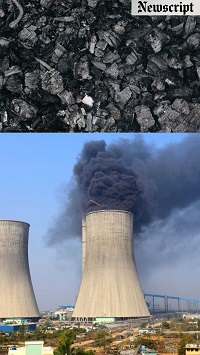
  By SATYAPAL MENON Newscript, August 15, 2025 Is India's considerable reliance on coal for power generation an unavoidable necessity, despite its’ potential hazards? Most of the futuristic projections point to continued dependence on this fossil fuel for catering to major chunk of country’s electricity requirements. This is substantiated by estimates which indicate that coal consumption would cross the billion-ton mark in the not too distant future, from 895 million tons in 23-24. Presently, Coal-fired power plants account for 75% of electricity generation in the country. Though there is a possibility of decrease in the percentage by around 20% to an estimated 55% in 2030, it also reflects the fact that coal-fired power plants would continue to account for more than half of India’...
ONGC’s ₹4,606cr Bet on the Bay: How a Slice of the Krishna–Godavari Basin Could Fuel India’s Energy Push
Corporate Watch

ONGC’s ₹4,606cr Bet on the Bay: How a Slice of the Krishna–Godavari Basin Could Fuel India’s Energy Push

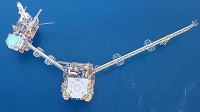
By Pallab Bhattacharya  Newscript, August 12, 2025 Fig.1: Arms Of Urja Oil and Natural Gas Corporation’s latest move is not a mega-field gamble but a calculated strike on two modest offshore blocks that could quietly strengthen India’s energy security. The ₹4,606.35 crore investment in Andhra Pradesh’s Chandrika and GS-49 fields, sitting under the shallow waters of the Bay of Bengal, is about squeezing proven reserves with precision rather than chasing headline-grabbing wildcats. Ten wells, two unmanned platforms, a pipeline to shore, and an expanded onshore terminal at Odalarevu form the skeleton of the project. If all goes to plan, first gas could flow by the latter half of the decade. But before any drill bit turns, the project must pass its first—and potentially slowest—tes...
Social Media Auto Publish Powered By : XYZScripts.com