Sunday, October 25

Energy & Resources

Telangana Blast Kills 36: Behind India’s Silent Industrial Crisis
Energy Transition, Uncategorized

Telangana Blast Kills 36: Behind India’s Silent Industrial Crisis

A deadly explosion at Sigachi Industries’ chemical plant in Telangana has killed 36 workers, exposing India’s deep-rooted industrial safety gaps and reigniting debate over regulatory enforcement. Key Pointers Deadliest industrial accident: The Sigachi Industries explosion marks one of the most catastrophic industrial incidents in Telangana’s history, claiming 36 lives and injuring dozens. Safety concerns exposed: The tragedy has reignited debates surrounding systemic lapses in India’s industrial safety protocols, particularly in the chemical and pharmaceutical sectors. Migrant worker vulnerability: Victims included migrant workers from multiple states, highlighting issues of unsafe working conditions across socio-economic divides. Regulatory scrutiny: Existing industrial s...
Monsoon Mayhem lashes India
Environmental Accountability

Monsoon Mayhem lashes India

Wayanad, Kerala — In late June, a hush settled over Chooralmala. The rains that drummed the hillsides last summer—the downpour that fractured the slopes and claimed at least 373 lives on July 30, 2024—had returned, but more gently. This time, the waters stayed at the riverbanks of Punnapuzha, rising slowly enough to avoid catastrophe, yet decisively enough to prompt district authorities to ban access to the damaged Mundakkai–Chooralmala area through July 25, 2025. After so much loss, even a calm monsoon reads as a warning. A Monsoon That Moves Faster India’s weather story in 2025 is one of speed and suddenness. The monsoon arrived in Kerala on May 24, nearly a week early, and had swept across the subcontinent by June 29—marking one of the fastest landfalls on record. Gone are the...
India’s Coal Conundrum : COAL-FIRED POWER PLANTS IN INDIA SPEWING TOXIC POLLUTANTS
Energy Transition, Metals & Mining

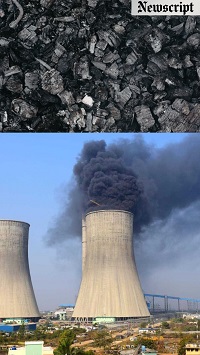
India’s Coal Conundrum : COAL-FIRED POWER PLANTS IN INDIA SPEWING TOXIC POLLUTANTS

  By SATYAPAL MENON Newscript, August 15, 2025 Is India's considerable reliance on coal for power generation an unavoidable necessity, despite its’ potential hazards? Most of the futuristic projections point to continued dependence on this fossil fuel for catering to major chunk of country’s electricity requirements. This is substantiated by estimates which indicate that coal consumption would cross the billion-ton mark in the not too distant future, from 895 million tons in 23-24. Presently, Coal-fired power plants account for 75% of electricity generation in the country. Though there is a possibility of decrease in the percentage by around 20% to an estimated 55% in 2030, it also reflects the fact that coal-fired power plants would continue to account for more than half of India’...
Mumbai Apocalypse : 20 Years After the Deluge
Environmental Accountability

Mumbai Apocalypse : 20 Years After the Deluge

Twenty years on, memory still haunts! On 26th July 2005 , the day began in the usual way. Sky was overcast, Air was thickened with moistures. By afternoon, the rain changed its voice. “The first 20 minutes were just a downpour. By 3 p.m., it sounded like the sky had cracked,” remembers Rekha Patil, a schoolteacher from Kandivali, whose students were trapped in their classroom until the next morning. “The school bell never rang that day. But every other alarm in the city went off—too late.” It was July 26, 2005. . By midnight, Mumbai had recorded an unprecedented 944 mm of rainfall, the highest 24-hour total in India’s meteorological history at the time, according to the IMD’s post-season bulletin. Most of it—709 mm—fell between 2:30 p.m. and 7:30 p.m. An unthinkable monsoon fury. The...
Market Leadership & Financial Performanc. Record Capacity Additions
Energy Transition, Technology

Market Leadership & Financial Performanc. Record Capacity Additions

By Pallab Bhattacharya Newscript, August 16, 2025 India added a record 22 GW of renewable energy capacity in H1 2025, marking a 57% increase year-on-year. Solar dominated with 18.4 GW, followed by 3.5 GW of wind, underscoring India’s accelerating transition away from fossil fuels. Corporate participation was pivotal. Players like NTPC, Adani, ReNew, L&T, and InSolare delivered projects at scale, supported by policy tailwinds and robust investor appetite. Analysts say the record additions highlight a shift: renewables are no longer an aspirational segment but the backbone of India’s power sector growth. The pace also reflects global factors, including declining technology costs and heightened ESG capital flows. However, integration challenges—storage, transmission, and c...
Hydrogen revolution catapults India toward global clean energy superpower status
Energy Transition, News Update, Renewables

Hydrogen revolution catapults India toward global clean energy superpower status

Government officials have outlined India’s national hydrogen mission as a transformative initiative that will establish the country as a global centre for hydrogen technology development, targeting both domestic energy transition requirements and emerging export opportunities in clean fuel markets. The comprehensive strategy encompasses production, storage, distribution, and application technologies across industrial and transportation sectors. The mission framework includes substantial public investment in research and development facilities, pilot project deployment, and manufacturing capacity creation for electrolysis equipment and fuel cell technologies. Industry partnerships with international technology providers are expected to accelerate domestic capability development whilst en...
The Day Lightning Fell
Environmental Accountability

The Day Lightning Fell

It began like any other monsoon morning in Bengal’s heartland—quiet, muggy, and deceptively calm. The sky hung low, layered with haze, as farmers in Bankura, East Bardhaman, and West Medinipur stepped barefoot into their fields. They had work to do—transplanting paddy, checking irrigation lines, feeding livestock—before the next round of rain. By mid-morning, the clouds thickened into a metallic mass. At 11:10 a.m., the first bolt of lightning fell. Within hours, the fields turned into sites of loss. By 2:50 p.m., eighteen men lay dead. There was no flood. No cyclone. No warning loud enough to be heard. Just a sky that cracked wide open, and didn’t close in time. It did not crackle. It did not warn. It sliced. By 2:50 p.m., eighteen men were dead—struck down by lightning in the very ...
India’s Scorching Future: Europe’s Heatwave Is a Warning We Cannot Ignore
Environmental Accountability

India’s Scorching Future: Europe’s Heatwave Is a Warning We Cannot Ignore

Delhi | July 3, 2025: As record-breaking temperatures sweep across southern Europe this week, killing at least eight people and crippling critical infrastructure, the warning signs for India are unmistakable. While Portugal saw the mercury touch an unprecedented 46.6°C, Italy issued red alerts in 18 cities and Switzerland shut down a nuclear reactor to avoid overheating. These are not isolated events. They are symptoms of an accelerating global crisis—and India may be the next epicentre. For a country where large parts of the population already endure 45°C summers without access to cooling, the lesson from Europe is chilling in its urgency. India is not just at risk. It is perilously close to a tipping point. The current European heatwave, one of the worst in decades, is being driven...
ONGC squeezes brownfields while scouting new offshore pools
Oil & Gas Industry

ONGC squeezes brownfields while scouting new offshore pools

Oil and Natural Gas Corporation (ONGC) reported an 18% rise in consolidated profit in Q1 FY26, despite a 20% fall in realised crude prices to $66 per barrel. The story is one of disciplined engineering: smaller exploration finds in Mumbai Offshore, restart of the PY-3 field in the Cauvery Basin, and enhanced oil recovery projects at mature fields in Ahmedabad. Gas is becoming the strategic cushion. ONGC has brought coal-bed methane from North Karanpura to market and commenced supplies from Tripura into GAIL’s city-gas network. These incremental additions mirror international practices—Equinor in Norway and Petrobras in Brazil have likewise prioritised brownfields and small pools when prices soften. Safety remains under scrutiny after a recent fatal incident at subsidiary MRPL. Manage...
Indian Oil balances volatile margins with LNG hedges and Russian barrels
Oil & Gas Industry

Indian Oil balances volatile margins with LNG hedges and Russian barrels

Indian Oil Corporation (IOC), India’s largest refiner, saw profit pressure in the June quarter as marketing margins fluctuated and inventory losses weighed. Revenues held near ₹2.22 trillion, but the numbers underlined how exposed state refiners remain to crack spreads and regulatory discipline. Operationally, IOC is leaning on term LNG contracts indexed to Henry Hub to hedge against volatile spot prices. Earlier this year it signed a five-year supply arrangement with Trafigura, ensuring baseload gas for its captive power and city-gas distribution. The company has also resumed purchases of discounted Russian oil as arbitrage widened, trimming feedstock costs at coastal refineries. Executives argue flexibility is key. “Securing a diverse crude basket is central to operational stabilit...
Social Media Auto Publish Powered By : XYZScripts.com