
In a silent corner of Ladakh’s Changthang plateau, where the land is so dry that even the wind seems brittle, a plume of steam rises from a field speckled with goat droppings and prayer flags. For centuries, nomadic shepherds here have treated the sulphuric springs of Puga Valley as little more than natural oddities—bubbling pools that boiled yak bones and warmed cracked palms during the long, cruel winters.
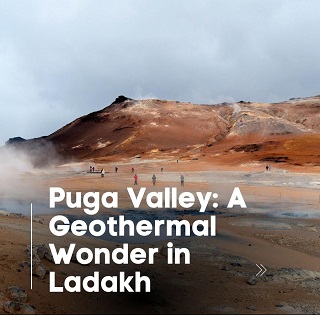
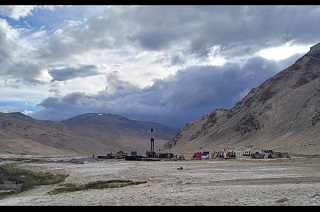
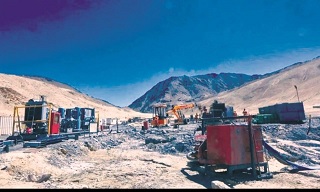
Now, a different kind of pilgrim has arrived. Wearing ONGC (Oil and Natural Gas Corporation ) coveralls and sporting helmets that look absurdly futuristic against the desolate backdrop, a team of geologists and engineers is drilling 1,000 meters into the Earth’s crust. They’re not looking for oil. They’re looking for heat. And in that heat, they’re hoping to find the future.
“We want to make this valley not just warm,” says Sunil Kumar, a project associate with ONGC Energy Centre, pausing beside the rig, “but bright—with light, with power, with purpose.”
It’s a bold ambition for a country that hasn’t produced even a single megawatt of geothermal electricity commercially. But it’s also a necessary one. India is running out of clean, reliable energy sources that work when the sun sets and the wind refuses to blow.
A Resource Hiding in Plain Sight
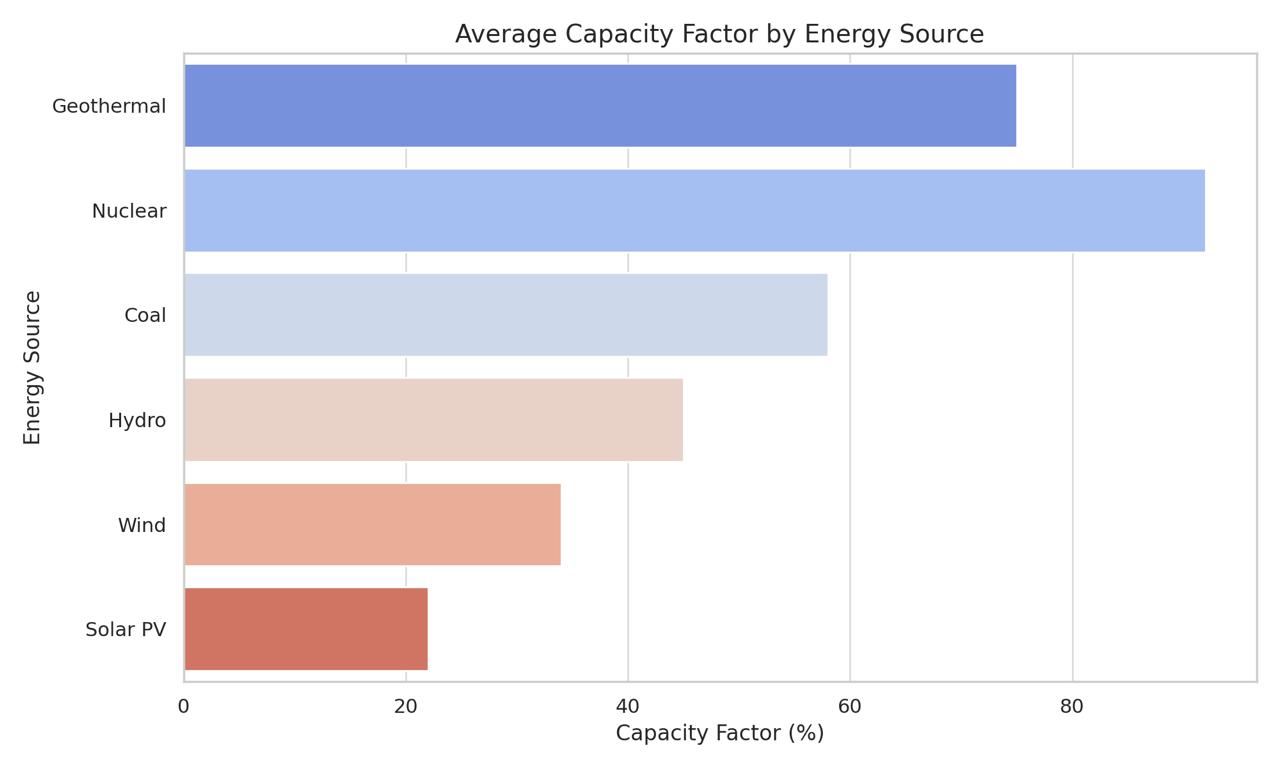
Geothermal energy has always been an elegant idea—heat from beneath the Earth’s crust, harnessed to run turbines, warm homes, and power greenhouses. Unlike solar or wind, it is always on. It doesn’t need batteries, it doesn’t care if it rains, and it doesn’t require land the size of small cities.
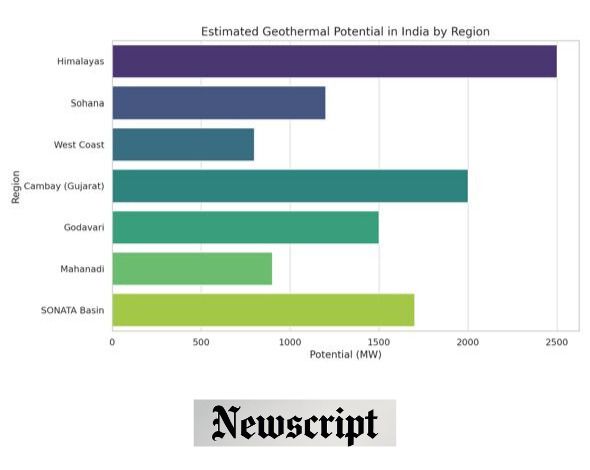
In theory, India has plenty of it. The Geological Survey of India (GSI) has mapped 381 “thermally anomalous” areas, which together hold an estimated 10,600 megawatts of geothermal power potential. But unlike solar panels that can be installed by the dozen on village rooftops, tapping into the Earth’s inner warmth is expensive, technically complex, and often seen as something that only countries like Iceland or New Zealand can pull off.

Until recently, India barely tried. Only a few pilot projects dotted the map—from a 20-kilowatt closed-loop plant in Telangana to three repurposed oil wells in Rajasthan’s desert. Puga Valley, however, could be the game-changer. With 80 naturally erupting hot springs and geysers, its geothermal capacity is not speculative—it’s steaming, roaring, and very real.
Why the Cold Desert Matters
Puga Valley is not just geologically exceptional. It’s emotionally evocative. At 14,000 feet above sea level, it feels like the edge of the world—a place where India becomes nearly indistinguishable from Tibet, and life bends under the weight of altitude and isolation. Ninety percent of Ladakh’s population relies on pastoral farming and subsistence agriculture. The economy hibernates every winter.
“When the power goes out here, it doesn’t just mean no television. It means no heater, no boiled water, no light,” says Dolma Angmo, a schoolteacher in nearby Chumathang village. “When you can’t feel your fingers for months, warmth becomes a kind of justice.”
What Puga offers, then, is not just energy—it’s dignity. The state-run ONGC’s geothermal project aims to provide one megawatt of round-the-clock electricity, enough to power a cluster of villages. But more than that, it will also heat homes, greenhouses, and even fish farms—small miracles in a place where frigid mountains and frozen dreams are part of daily life.
This matters beyond Ladakh too. If geothermal power can work here—absolutely harsh terrain, ecologically fragile, and brutally cold—it can work in other parts of India. And India badly needs it particularly in the face of spiralling demands and soaring imports of energy.
A Nation in Need of Baseload
For all its solar ambition, India remains energy-starved. Its cities flicker with surging demand, its grids wheeze under peak loads, and its rural belts still struggle with patchy connections. Coal, for all its environmental costs, continues to shoulder over 55% of electricity generation. Imports of oil and gas weigh heavily on the exchequer.
Geothermal energy offers something rare: domestic, uninterrupted, zero-carbon baseload power.
The Ministry of New and Renewable Energy (MNRE) has quietly folded geothermal into its long-term roadmap. By 2047—India’s 100th year of independence—the government envisions 1,800 GW of non-fossil power. Geothermal’s slice in that pie may be small, but it is crucially reliable.
The economic appeal is growing. India has over 13,000 abandoned oil wells—each a pre-drilled invitation to experiment with geothermal retrofits. Projects like the one at IIT Madras, where such wells are being repurposed in Bikaner, could slash capital costs and shorten construction timelines dramatically.
Santosh Kumar Sarangi, Secretary at MNRE, is cautiously optimistic. “If the pilots succeed, commercial expansion is definitely on the table,” he’s quoted as saying. The ministry offers full R&D subsidies to public institutions and up to 70% to private startups. Even so, the pace remains glacial compared to solar’s meteoric rise.
Learning From the World Beneath
Globally, geothermal is undergoing a quiet renaissance. In Kenya, it powers 30% of the national grid. In the United States, Enhanced Geothermal Systems (EGS) are pushing boundaries—drilling horizontally, injecting water, and unlocking heat from dry rock. In Germany, closed-loop geothermal “radiators” are being installed under entire towns.
India could learn from these models. But it must also localize them—technically, financially, and culturally. The drill rigs may be imported from Iceland, but success will depend on how well India integrates its geothermal story with its grassroots needs.
Because unlike solar farms, geothermal plants are not just about panels and meters. They need geologists, hydrologists, heat-pump engineers, and most of all—trust from local communities.
ONGC’s earlier attempt at drilling in Puga was halted in 2022 after villagers protested against hot brine discharges contaminating streams. The new project, built on consultation, technical refinement, and transparency, is a second chance.
“This is not just a project,” says Tana Tage, director at the Centre for Earth Sciences and Himalayan Studies. “It’s a model for what energy justice can look like in India.”
The Heat of Tomorrow
There is poetry in the idea that the Earth’s oldest fire—buried beneath layers of crust and eons of pressure—might power the next century. But policy requires more than poetry. It needs risk mitigation funds, drilling insurance, feed-in tariffs, and public-private geothermal development firms like Kenya’s GDC.
Above all, it needs vision.
The success of Ladakh’s project could catalyze dozens more—in the Sohana ridge near Delhi, the Cambay basin in Gujarat, the Godavari graben in the south. Modular kilowatt-scale plants could energize tribal villages, hill towns, or even border posts where diesel generators now throb like cancerous lungs.
And for India’s youth, a geothermal push could open new careers—in deep drilling, thermal chemistry, and low-carbon entrepreneurship.
Quest
As the sun dips behind the ice-dusted ridges of Puga, the drill keeps turning. Below, 1,000 meters into the granite, the Earth pulses with energy—ancient, clean, waiting.
India is often told to look up—to harness the sun and watch the skies. But sometimes, the answer lies beneath. The question is not whether geothermal will replace coal or compete with solar. The question is whether India will listen to the heat humming beneath its feet—and turn it into a quiet revolution.